
- Mac Server 4 0 Download
- Mac Server 2020
- Mac Server 4 0 Settings
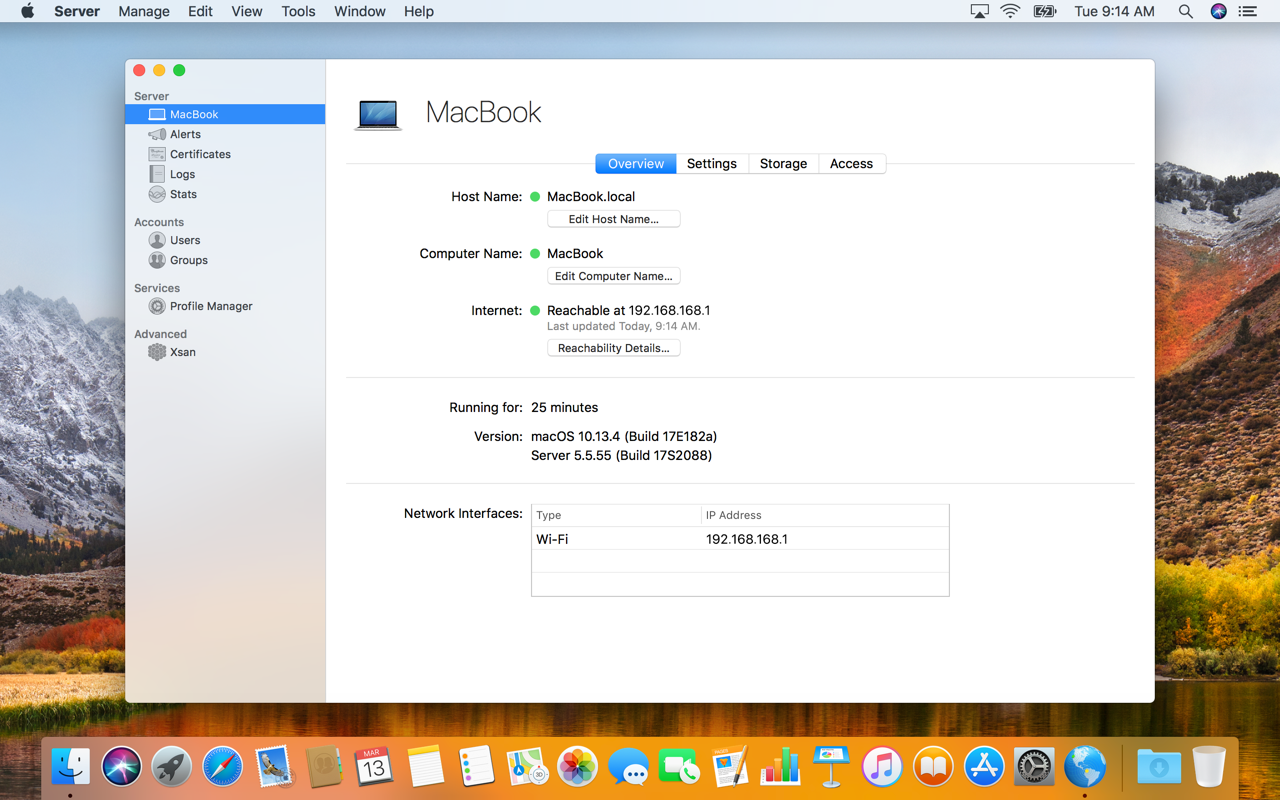
Setting up OS X Server has never been easier. Neither has upgrading OS X Server. In this article, we'll look at upgrading a Mac from OS X 10.8 or 10.9 running Server 2 or Server 3 to OS X 10.10 (Mavericks) running Server 4. The first thing you should do is clone your system. The second thing you should do is make sure you have a good backup. The third thing you should do is make sure you can swap back to the clone should you need to do so and that your data will remain functional on the backup. The fourth thing you should do is repeat all that and triple check that your data is there! Once you're sure that you have a fallback plan, let's get started by downloading OS X Yosemite from the App Store. I would also purchase the Server app first while Yosemite is downloading. Once downloaded, you'll see Install OS X Yosemite sitting in LaunchPad. Once downloaded, you'll see Install OS X Yosemite sitting in LaunchPad, as well as in the /Applications folder. Open the app and click Continue (provided of course that you are ready to restart the computer and install OS X Yosemite). At the licensing agreement, click Agree (or don't and there will be no Mavericks for you). At the pop-up click Agree again, unless you've changed your mind about the license agreement in the past couple of seconds. At the Install screen, click Install and the computer will reboot and do some installation fun stuff. Once done and you're looking at the desktop, download the latest version of the Server app you should have purchased previously, if you haven't already. Then open it. If prompted that the Server app was replaced, click OK. Then open the app. At the Update screen, click Continue (assuming this is the server you're upgrading). At the Licensing screen, click Agree. When prompted for an administrator account, provide the username and password of an administrator and click OK. When the app opens, verify DNS (absolutely the most important element of this upgrade), etc and then check that configured services still operate as intended. If you end up deciding that you no longer need OS X Server, just delete the app and the contents of /Library/Server and you're good. Handle with Care.
1 1 like 50,123 views Last modified Sep 24, 2018 12:36 PM
As of the posting of this tip, the Mac OS 9 downloads on Apple's support site are not fully available.
The other thing to note, is that no Mac running Mac OS X 10.3 or higher supports the old style floppy disks of under 1.4 MB. The beige PowerMacs were the last that supported the 800k floppies with the single notch on the the corner. If you have floppies with two notches on either corner of the label, then they are 1.4 MB. 1.4 MB floppy looks like.
- MacOS Server is a self-explanatory server application specially designed for macOS and iOS devices that enables you to control and manage multiple user accounts and devices from within a well-designed interface. MacOS Server is distributed via the Mac App Store and can be bought, downloaded.
- Review Free Download. MacOS Server is distributed via the Mac App Store and can be bought, downloaded and installed for $19.99. MacOS Server is.
- MacOS Server, formerly Mac OS X Server and OS X Server, is the server edition ofMac OSX developed by Apple Inc. It is based on the BSD-Unix derived operating system Apple Computer that acquired from NeXT to form the basis of AppleShare services provided server applications such as file and printer sharing and user management. 1 Product history 2 Release history 2.1 Mac OS X Server 1.x (Hera.
This tip of a method of obtaining the downloads was suggested by sdfox7. Special thanks to them for decoding
how to discover old downloads.
Locate the support.apple.com website for the download. In the case of most of the system downloads for Mac OS 9, there is this link:
and
In event the link doesn't work, go to http://web.archive.org/ to find it. For this link, the example site is:
If you are looking for the 9.2.2 download, the direct link from that page is
Clicking through
Best apps for your new mac. First on the page you will find North American English, 9.2.2, 21.3MB.
When you right click, or control-mouse button the download link and select copy link, you obtain:
Edit this link to reveal just the file name and not the path going to it and paste it in your favorite search engine. In this case, the file name is:
Mac_OS_9.2.2_Update.smi.bin
https://roulettesoft.mystrikingly.com/blog/how-do-i-update-safari-5-1-10.
Searching you'll find that this link has that download.
As it happens, the website: Adobe premiere pro for mac download torrent.
has the download links for all the Mac OS 9 updates and others.
You can use a similar method for many other downloads of older software.
As I also found out, .bin files even Mac OS X 10.9 understands. .smi files Disk utility won't open in Mac OS X 10.9, but it will convert to .dmg files.
If you copy the contents to a USB Flash drive of the same name as the dmg file (without the suffix), it can hold the installer in question and connect older Mac OS 9 machines to run the installer from. Just make sure the USB drive is formatted HFS+ no journaling, or FAT16 and under 4GB in size.
The other thing to note, is that no Mac running Mac OS X 10.3 or higher supports the old style floppy disks of under 1.4 MB. The beige PowerMacs were the last that supported the 800k floppies with the single notch on the the corner. If you have floppies with two notches on either corner of the label, then they are 1.4 MB.
Mac Server 4 0 Download
1.4 MB floppy looks like:
400k and 800k floppy look like:
Note how the 800k only has one notch for the write protect tab, and no other opening on the other corner.
Mindnode 5 for mac free download. Adobe photo plus.
The thread I learned about this method isLinks for Mac OS 9 Downloads are faulty!
Mac Server 2020
Other older knowledgebase links can be found by this tip's methods:
Some of the articles linked to for these updates may refer to the old knowledgebase format which may yield links you can convert with archive.org,
as described below:
Mac Server 4 0 Settings
Note: the ii.net mirror that used to be linked to no longer exists.




/image%2F6310937%2F20210327%2Fob_b9360b_how-to-take-screen-shot-on-a-mac.jpeg)
/image%2F6310937%2F20210327%2Fob_161146_final-cut-pro-video-editor-for-mac.png)
/image%2F6310937%2F20210327%2Fob_2f796a_geforce-experience-mac.png)
/image%2F6310937%2F20210327%2Fob_ecd48f_how-to-install-pubg-mobile-emulator-on.jpeg)